
metallurgy
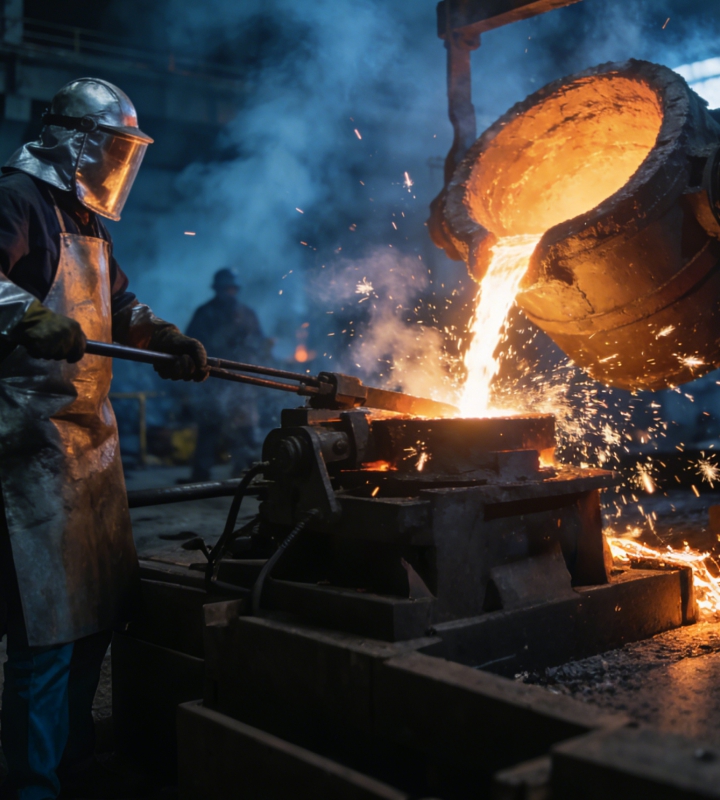
In the metallurgical industry (specifically steel and non-ferrous metal smelting), operations are characterized by pervasive high-temperature radiation, extreme dust accumulation, cooling water sprays, highly corrosive flue gases, intense vibration, heavy mechanical shock loads, and significant electromagnetic interference. Under these conditions, standard power sockets are prone to melting, short-circuiting due to dust buildup, and electrical leakage caused by water ingress. Consequently, the use of industrial-grade waterproof plugs—specifically designed to withstand high temperatures, offer superior ingress protection, and possess flame-retardant and anti-aging properties—is absolutely essential to ensure the safety and continuity of power supply for steelmaking, rolling, and smelting operations.
I. Core Application Scenarios
1. Ironmaking and Steelmaking Main Process Areas
Equipment: Blast furnace cooling water pumps, furnace-front dust extraction fans, steelmaking converter auxiliary drives, furnace body spray cooling systems, local on-site control cabinets.
Operating Conditions: High-temperature exposure, direct impact from cooling water jets, dense dust and fumes, intense thermal radiation.
Configuration: IP67 high-level protection, high-temperature resistant and flame-retardant housing, resistance to rapid thermal cycling, 32A–63A 4/5-pin industrial waterproof plugs.
Value Proposition: Protection against water ingress and dust accumulation/corrosion; enables rapid plug-and-play for equipment maintenance without requiring a full production line shutdown.
2. Rolling Mills / Hot and Cold Rolling Production Lines
Scenario: Rolling mill auxiliary motors, conveyor roller tables, spray cooling equipment, straightening machines, in-line inspection instrumentation.
Environment: Exposure to flushing from emulsions and cooling water, heavy oil contamination, severe mechanical vibration.
Requirements: Oil-resistant and watertight sealing, high tensile strength with anti-loosening mechanisms, IP67 rating, vibration-resistant contacts to prevent arcing.
3. Metallurgical Dust Removal, Desulfurization, and Denitrification Systems
Equipment: Induced Draft Fans, Baghouse Dust Collectors (with Shaking Mechanisms), Desulfurization Slurry Pumps, Denitrification Dosing Equipment, Ash Silo Discharge Systems
Operating Conditions: High dust levels, corrosive (acidic/alkaline) flue gases, outdoor open-air installation, significant fluctuations in temperature and humidity
Product Selection: Corrosion-resistant, IP67-rated industrial waterproof plugs; resistant to sulfidation and acid/alkaline corrosion; designed to support continuous operation in environmental protection systems
4. Raw Material Stockyards & Conveyor Belt Galleries
Application Scenarios: Ore unloading vehicles, mobile power supply for conveyor belt heads and tails, dust suppression sprinkler systems in stockyards, temporary power supply for maintenance within galleries
Key Challenges: Heavy accumulation of airborne mineral dust, exposure to rain and direct sunlight, frequent movement of equipment, susceptibility of cables to abrasion and crushing
Solution: Standardized waterproof socket boxes combined with 16A/32A dustproof and waterproof plugs; ensures neat and organized cabling while preventing short circuits caused by dust accumulation
5. Metallurgical Circulating Water & Wastewater Pumping Stations
Equipment: Turbid Water Circulation Pumps, Clean Cooling Circulation Units, Metallurgical Wastewater Lift Pumps
Environment: High humidity with standing water, sediment and impurities, water bodies containing corrosive metallurgical media
Configuration: IP67/IP68 Submersible-grade Waterproof Connectors; Hydrolysis-resistant Insulation; Resistance to Corrosive Media
6. Plant-wide Mobile Maintenance & Smart Metallurgical Support
Temporary Maintenance: Rapid power access for welding machines, grinding and cutting tools, and on-site commissioning instruments—serving as a safe alternative to haphazardly strung temporary wiring
Smart Equipment: Waterproof power connections for AI metallurgical inspection robots, high-temperature monitoring systems, and edge data acquisition devices
II. Specific Core Technical Requirements for Metallurgy Applications
Ultra-High Protection: Dustproof and Waterproof
Context: Process spraying, cooling wash-downs, and heavy dust accumulation.
Requirement: Standard IP67 rating; IP68 required for underwater pump stations. Must completely prevent water and dust ingress to avoid insulation breakdown.
High-Temperature Resistance + Thermal Shock Resistance
Context: Exposure to thermal radiation in furnace zones and low winter temperatures.
Requirement: Housing must be flame-retardant and resistant to thermal deformation; sealing rings must withstand aging caused by extreme temperature fluctuations.
Resistance to Oil Contamination and Metallurgical Media Corrosion
Context: Exposure to rolling emulsions, corrosive sulfur-rich flue gases, and abrasive mineral dust.
Requirement: Preferably utilize modified engineering plastics or corrosion-resistant metal housings, combined with fluororubber seals.
High Vibration Resistance + Anti-Dislodgement Security
Context:High vibration levels generated by rolling mills and industrial fans.
Requirement: Incorporate a locking mechanism with tensile-resistant structural design to prevent contact loosening, overheating, and electrical arcing.
Safety: Anti-Mismating Design + High Current Capacity
Context: Ensuring safe and correct electrical connections.
Requirement: Compliant with IEC 60309 standards regarding color-coding and keying configurations to prevent incorrect connections; compatible with high-power metallurgical equipment across a wide current range of 16A to 125A.
III. Core Application Value
Withstands the harsh operating conditions typical of metallurgical environments—including high temperatures, heavy dust, water spray, corrosion, and severe vibration—thereby reducing the frequency of electrical-related downtime.
Enables standardized, rapid plug-and-play maintenance, eliminating the need to power down entire production lines and thereby boosting continuous production capacity in metallurgical operations.
Eliminates safety hazards such as dust-induced heat accumulation, water ingress leading to electrical leakage, and connector arcing, ensuring compliance with safety production regulations in high-risk metallurgical workshops.
Offers exceptional weather resistance, corrosion resistance, and longevity, reducing the frequency of component replacement and significantly lowering electrical operation and maintenance costs across the plant facility.